‏إظهار الرسائل ذات التسميات Villes et régions. إظهار كافة الرسائل

الأحد، 21 يوليو 2013

Chefchaouen

Visiter la Médina de Chefchaouen

Chefchaouen est une charmante petite ville d'environ 40.000 habitants qui se trouve à environ 100kmde Ceuta sur les pentes des monts Tisouka (2050m) et Megou (1616m) de la Cordillère du Rif, qui s'élèvent au-dessus de la ville comme deux cornes, donnant ainsi son nom à la ville (Chefchaouen en berbère signifie "regarde les cornes"). À environ 660m. d'altitude et avec très peu de trafic de voitures, on y respire un air limpide et frais qui invite à y passer quelques jours pour découvrir la beauté de ce lieu et de son environnement..


La Médina de Chefchaouen - o Chaouen o Xauen - est assez tranquille et petite. si nous y entrons par l'une de ses cinq portes et nous laissons emporter par nos sens, nous nous retrouverons inondés par de nombreuses sensations nouvelles comme les odeurs du pain fraîchement sorti du four à bois ou du tajine prêt à être mangé.
               
La grande variété de couleurs des différentes produits des magasins et bazars contrastent avec le blanc bleuté éblouissant des maisons. Le mélange des voix et sons inconnus vous guidera au long des ruelles qui serpentent inévitablement jusqu'au point de rencontre et repos, la Place Uta el-Hammam.
               
      
Ici à l'ombre du mûrier, on peut se prélasser sur la terrasse d'un restaurant ou d'une cafétéria, tout en observant les allées et venues des passants et la beauté de la Grande Mosquée et de la Kasbah en face.
               
Quelques pas plus loin se trouve la Place de Makhzen avec l'hôtel Parador et le parking public, d'où l'on peut prendre une ruelle qui mène au nord-est à Bab el-Ansar et à la source de Ras el-Maa, l'un des plus beaux endroits de Chaouen.
On peut alors descendre le long du ruisseau bercé par l'agréable son de l'eau et voir comment les femmes font la lessive et comment fonctionnent encore les moulins hydrauliques. Cette jolie promenade nous mène à Rif Sebbanin, le quartier des lavoirs, avec la Place de Sebbanin et sa mosquée du XVe siècle.
               
       
Depuis là on peut poursuivre le parcours jusqu'au centre de la Médina, ou se diriger vers la ville moderne dans la partie basse de la ville, ou en direction de la campagne... ou où te mène ton chemin - que tu fasses de belles découvertes...!
               

Quelques autres idées pour visiter Chefchaouen:

- visiter les jardins de la Kasbah et leur petit musée qui abrite une petite collection d'armes anciennes ainsi que des instruments, des textiles et quelques photos historiques de la ville; il y a aussi une galerie d'art à l'intérieur des murailles.

- descendre à la ville moderne un lundi ou jeudi pour y connaître le marché où les habitants de la montagne en tenues traditionnelles viennent offrir leurs produits.

- monter à la petite mosquée Jemaa Bouzafar depuis Ras el-Maa pour voir le coucher du soleil.

- ou monter directement dans les montagnes - nous vous recommandons de prendre un guide - pour profiter d'une nature magnifique (plus d'informations dans la section excursions


.

السبت، 6 يوليو 2013

ifrane


Ifrane signifie en Tamazight (berbère) grottes, (singulier: Ifri). Nombreuses dans la région, les grottes ont transmis leur nom à la région, plus connue des juifs sous forme: Oufrane.
Les premières traces de l'installation humaine dans la région remontent au Néolithique. Des grottes telles que celles de Tizguite ainsi que les vestiges archéologiques remontant à la Préhistoire à Zerouka, Ghabt, Al Bahr et Itto en témoignent.
Par la suite, la région d'Ifrane fut habitée d'abord par les berbères puis par les juifs, et ce, depuis environ trois milles ans avant Jésus-Christ. On prétend qu'elle a été la cité de la plus ancienne colonie juive au Maroc.
Selon la tradition orale, les israélites ont quitté la Palestine au temps de Nabuchodonosor, roi de Babylone (160 Km au sud de Bagdad) après la première destruction du temple en 587 av.JC Il traversèrent l'Egypte et la bordure septentrionale du Sahara, puis parvinrent au rivage atlantique de l'anti-atlas en 361 avant Jésus-Christ et s'installèrent en premier lieu dans les grottes en bordure de l'oued Ifrane, et ce, après qu'ils aient pu acheter l'autorisation de s'installer aux autochtones.
A la suite d'une alliance avec ces derniers ils fondèrent un royaume dont le roi était "Ephrati" (de la tribu d'Ephraïm: l'une des douze tribus d'Israël).
Ce royaume a été nommé "la petite ou la seconde Jérusalem" ou qui - selon leur croyance - fut chuté au moment ou ils ont refusé de répondre à l'appel de leurs prophète "AZAR" afin de pouvoir rejoindre "Jérusalem". Les descendants d'Ephraïm perdaient alors leurs souveraineté au profit des berbères
Ifrane renferme le plus ancien document historique au nord africain: c'est la tombe d'un juif nommé "Rabbin youssef ben Mimoun" qui serait mort en l'an 5 av.JC Elle se trouve au cimetière juif connu sous le nom de "Lmiâra" (nom donné par les juifs marocains à tous leurs cimetières
Ifrane est sera habitée plus tard par une population issue deux grandes tribus Sanhaja, les Béni M'guild et les Béni M'tir dont le flux vers le nord avait été "arrêté" au XVe siècle par la ceinture des Casbahs fondées par le Sultan Moulay Ismaïl, ce qui a eu pour effet de favoriser la création de noyau de sédentarisation des nomades et a permis la constitution d'agglomérations telles que Azrou et Aïn Leuh ..
Bien plus tard, Ifrane sera désertée pour les autres villes du nord nées de la naissance du Royaume chérifien du Maroc par Moulay Driss Premier, Roi fondateur de la Dynastie qui porte son nom () et du Maroc.
Quelques siècles plus tard, plus exactement en 1928 et en hommage au passé lointain de la ville, par arrêté viziriel (ministériel marocain), les autorités du protectorat français décidèrent de créer un centre d'estivage appelé Ifrane (grottes en tamazighte). Deux projets de création d'une station d'estivage furent proposés à Eirik Labonne, secrétaire général du protectorat. Le premier était celui de l'actuelle ville d'Ifrane et le second optait pour la ville de Ksiba Moha ou Saïd.
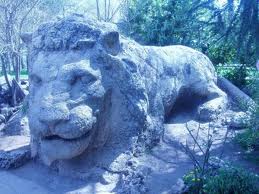
La situation géographique d'Ifrane, la topographie et son climat privilégié, déterminent le choix du Gouvernement marocain à l'édification d'une station estivale dans un espace vierge de toute construction. Une partie de la main d'œuvre sera constituée de prisonniers. Le 9 juillet 1929 arrive le premier camion de matériaux. Le 15 août 1929 voit l'inauguration des hôtels, du Casino, de chalets, ainsi que le Centre d'estivage et de la place du lion. E. LABONNE.
Ifrane se transforme alors en station aux allures suisses que nul ne croirait croiser en se baladant dans ces régions berbères du Maroc. Chacune de ses villas porte en elle des caractéristiques: des toitures, à tuiles rouges, que certains avancent certaines hypothèses, notamment celles qui concernent leurs pentes. En effet, ces dernières varient de l'angle obtus à l'angle aigu en passant par l'angle droit. Ces inclinaisons rappellent ainsi l'évolution de l'architecture des constructions en France du Sud au Nord, autrement dit de la Côte d'Azur à la Manche. Le visiteur peut même remarquer l'existence de façades typiquement normandes ou bretonnes, voire alsaciennes. Par un sentiment de nostalgie, chaque Français voulait ainsi transposer le mode d'habitation de son pays d'origine et mémoriser par la même occasion son passage. Un Français qui a vécu à Ifrane de 1936 à 1992 confiait «à propos de l'évolution du tissu urbain de cette cité, qu'en fait les décideurs de l'époque voulaient faire cette une ville où le Français ne se sentira à aucun moment dépaysé ».
Ifrane est le centre d'estivage marocain le plus fréquenté. La province d'Ifrane se trouve au cœur du Moyen-Atlas avec une superficie de 3573 km2. Elle est habitée par deux grandes tribus Sanhaja, les Béni M'guild et les Béni M'tir. Station de montagne, cette cité est devenue un haut lieu des sports d'hiver. Avec ses chalets aux toits couverts de tuiles rouges, elle est située à 1650 m d'altitude.
Ses richesses naturelles ont amené les responsables de la région à créer un parc national de 53000 ha. C'est dans cette région qu'on trouve la plus grande forêt de cèdre du pays. De son vrai nom Ourti (jardin en tamazigh), Ifrane est le centre d'estivage marocain le plus fréquenté. Ses lacs sont incontournables pour la pêche à la truite et au brochet. Elle est également une région pastorale et possède une station expérimentale pour l'étude des comportements des animaux.
Ifrane abrite l'une des plus prestigieuses universités du Maroc: Al Akhawayne University In Ifrane, où l'enseignement est entièrement anglo-saxon.


Rabat, capital of Morocco


Capital of a Modern State, Rabat is the symbol of the continuity of Morocco. Entwined in its miles of pregnant amber color, dotted with distinctive nettle trees, it blends into the same elegance and its historic center with modern culture.

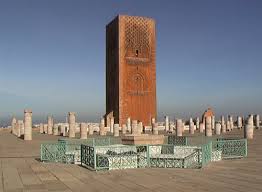
The Kingdom's capital, overlooking the Atlantic Ocean, has its roots in the history of the millennium city so often coveted by invaders in search of a strategic retreat Yacoub El Mansour, the Almohad, erected their tents in XII century, before Merinids in turn affix their mark by drawing on the ancient Roman city of Sala, the necropolis of Chellah. At the heart of the city stands the Tour Hassan, the last vestige of an unfinished mosque. Behind the marble columns, the Mohammed V Mausoleum engenders respect and reverence.

Built on the banks of the estuary of the Bouregreg, Rabat offers a number of walks around the flowering of the Atlantic Ocean. The many buildings it contains are testimony that speak volumes about its authenticity and Rabat proudly her attire in the elite of the imperial cities. In the maze of alleyways, the Oudaïas Kasbah, Islamic art rubs large modern achievements. The result is a shimmering mosaic brightens the eyes of many passers-by and meet their every requirement.

Well face on the other side of the wadi, the superb white medina of Salé (Sala Al Jadida) contains treasures craft. The gardens of Rabat-Salé, planted with species from around the world, be admired a maze of trails cut suspension bridges and walkways in an exotic setting.

Connected by a bridge to Rabat, Salé has retained the character of the small towns of Islam with its shaded souks, its sunny squares and quiet streets, but its new quarters are an economic metropolis of the first order.


الأحد، 30 يونيو 2013

Saidia Splendor of the Mediterranean

The blue pearl of Morocco Saidia is modernizing so that you can soon enjoy the turquoise Mediterranean, the 14 km beach and a beautiful hinterland.
gold ribbon

A beautiful bay, and above 14 km of sandy beach ... Saidia resort is a new generation that its Moroccan charm. Stroll under the mimosa and eucalyptus trees that line the beach, sunbathe freely and especially dive into the turquoise water that invites you to relax.
Corniche dream
Saidia beach

To appreciate the transparency and clarity of the sea lapping gently, a walk on the ledge is required. This is the appointment of families and holidaymakers in the late afternoon, when the sand is a golden brown color and everything becomes softer and softer.

Appel du large

La toute nouvelle marina, qui compte 850 anneaux, sera un but de promenade, même si vous n’êtes pas marin ! Vous y trouverez des écoles de voile, de plongée et de ski nautique
À proximité, des restaurants, un centre thermal, des boutiques. Un éventail diversifié d’activités et de services vous est proposé pour passer des vacances inoubliables dans un cadre qui joue la carte de l’élégance et du confort contemporain.

  Escapade urbaine 


Profitez de votre séjour à Saïdia pour aller à Oujda, à une soixantaine de kilomètres au sud de la station balnéaire. La capitale de la région de l’Oriental du Maroc possède une belle médina dont la kasbah, l’ancienne citadelle, veille sur une école coranique du XIVe siècle. Oujda vous invite aussi à explorer ses beaux marchés. C’est l’ambiance rêvée pour écouter la musique gharnatie, les mélancoliques sonorités arabo-andalouses.
.

الاثنين، 24 يونيو 2013

The historic city of Meknes


This city is situated area farming fertile, at the crossroads of trade routes that were linking several points making it a transit area and stability since the Old Testament, especially in the Middle Ages where emerged as the name for the first time , and then in the modern era as the capital of the most prominent capitals, which played an important role in the Islamic history of the West.Associated with the name of the city of Meknes initially Zenata Amazigh tribes who settled in central Morocco and easy Sais, especially on the banks of the Wadi Boufekrane and the valley and Slane.With the advent of marabouts city flourished, and featured some of the most important neighborhoods trachea Almoravid "Takart" also built a mosque carpenters city and surrounded by a fence at the end of their reign. The neighborhood is still there near a mosque built by carpenters stationed oldest neighborhoods of the city.

Under the rule of Unitarian knew the city prosperous urban where the expansion of the Grand Mosque of Mohammed Nasser era (1199-1213 AD), and the city's water supply by a sophisticated system from appointed "Takma" to meet the needs of mosques and baths waterings as custom present Covenant recognize the emergence of new neighborhoods such as new bathroom district and neighborhood Sidi Ahmed Ben greenery. During Covenant Almareni the city has seen a large number of stability Andalusians came to Meknes after the fall of the most important centers of Andalusia. And has built Sultan Almareni Abu Yusuf Yaqub (1269 - 1286 AD) Reed outside Almudbna not stand them except the mosque known Balala return. Olive as defined Mcnash the building of schools Vintage teacher Filalh, and school Albuananah and reverse schools, mosques such as Mulberry mosque, Blue Mosque, and the Grand Mosque and wardrobe Marstan new door and a bathroom peduncle. In the era of the upper state, especially during the period of the reign of Sultan Moulay Ismail, the city regained its status as the capital of the state, so I knew brighter periods of its history. Has constructed buildings of a religious nature Mosque door Bardeian and the Zitouna Mosque and Mosque Sidi Said, and suggest these mosques beacons by the method of decorating the impact of Saadi and clear. In addition to palaces and other important buildings, it was the Sultan Moulay Ismail the construction of the large house above the ruins of the Kasbah Marinid and the old part of the city.


It also completed the Garden many (Searawih - Sawani), and stables for horses and grain stores and Tank to provide neighborhoods with water, and took the city by a wall punctuated by several large urban towers and historic doors kebab Mansour and door Bardeian.These doors near several hotels or prepared to break stations from distant areas, and the market was organized and defined by the type of profession or industry, such as market carpentry and blacksmithing and other market. .The city Meknes Bashsaah the area and the multiplicity of its historic buildings and walls where shrouded Moulay Ismail walls stretching along 40 kilometers, punctuated by a series of doors and huge urban towers.White PalaceFounded in the 19th century by Sultan Mohammed bin Abdullah. Later turned into a military academy, but he kept its historical and character and architecture of the top architectural character.Royal PalaceThere inside the trachea Ismailia, built by Moulay Ismail at the beginning of the 18th century AD. Dominated by the character of military architecture.Dar university PalaceBuilt in the reign of Moulay Hassan I, about 1882 m to be the headquarters of the housing minister Abu Abdullah University. The palace was initially contains a bathroom and a place for sacrifices, shops and a hotel. Characterized minors  (Riyadh), Andalusian-styleGara prisonBuilt in the 18th century AD inside the trachea Ismailia, near the Dome of the ambassadors, and the lower level of the land over a large area. Designed in the form of semi-rectangle, divided into three halls is very broad, enjoyed each and every one of them a series of arches and massive pillars. 

Tank Sawani

There are just 500 meters south of the royal palace and the Almchor Arena. Built in the 18th century AD, and is among the largest and most important historical monuments in Meknes. Contains a set of the halls that are organized around a vast middle hall. This building is designed for the storage of food particularly cereals, in addition to being it contains several wells supplied Tank Sawani which adjoins this parameter and is a part of it.Dome ambassadorsThere inside the trachea Ismailia, behind a door Mansour علج. And is a square portico, built by Moulay Ismail and allocated to receive ambassadors and envoys from abroad to display.The Mansour  door


There are close to from Piazza Ahudam. Founded by Moulay Ismail, complete construction of his son Moulay Abdellah around 1732 AD. This section features the enormity of their standards, as it contains the slot height of 8 meters, as accounted the picturesque carved porcelain polychrome mosaics.Door ThursdayIt was originally a western part of the city of Riyadh amber, which recently Moulay Ismail (18th century AD), to house an army to Udayh as well as for the benefit of some of the notables of the city. But it did not last much, in 1731 devastated by his son Moulay Abdellah, who ruled after him.Mirah doorConsidered stages door of the historic medium-sized doors to the capital Ismailia constructed during upper Testament, reflected major importance is reflected in being an integral part of the walls surrounding the Royal Palace Square to the city of Meknes.Dar pashasBuilt House pashas as evidenced by the inscription on the Plaster hall and Sakia wall between the years 1912 and 1913 by Benaissa bin Abdul Karim bukharis who was serving as Pasha city. This building has seen the establishment of a group of pashas to the borders of 1969, a year in which they will switch to the headquarters building of the province of Andalusian music of the Ministry of Culture.The building is a model of architecture, Spanish - Moriskyh, has two entrances: the main entrance is from Olive Tree neighborhood across Basha trail, and the second entrance through a small house next door has continued neighborhood of the bottom of the rose.School Albuananah theFounded Sultan Almareni Abu Hassan, then Complete construction of his son Abu Annan about 1345 e. Received their columns and doors decorated with wonderful, including the pattern of writings and floral and geometric motifs on wood, plaster and tiles, still yet reserves Bbhaúha and greatness. From the engineering building contains a prayer hall and yard, columns, and all rich niche with written carved motifs.Tower Belkara


The tower Belkara of the important historical monuments of the city of Meknes, was built in the reign of Sultan Moulay Ismail (1672-1727), who in his city witnessed the height of the architectural and engineering growth and civilization. The tower is part of Ismailia walls that surrounds the city, due to the importance of
the ministry restored and rehabilitation to even play a role in cultural development at the local level and so  to Moulay Ismail Museum.

الخميس، 13 يونيو 2013

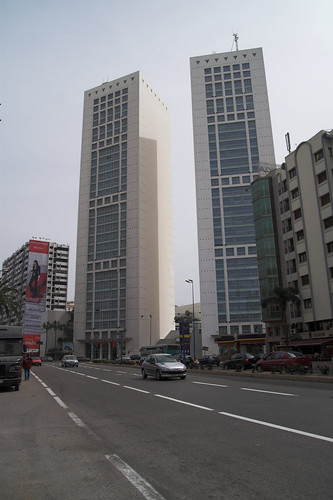
Casablanca International City

english


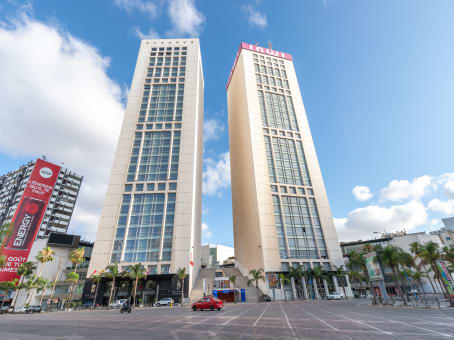
Casablanca is a Moroccan city overlooking the Atlantic Ocean. It is also the capital of the Grand Casablanca region. The city is home to over 3.1 million people, is the largest city of Morocco is also one of the largest industrial harbors in the world. And includes the main naval base of the Moroccan real estate. Architects began designing this model city in 1912 and turned into a charming modern city changed dramatically is the city until today as the largest city in North Africa is also a masterpiece of incredible architecture it contains wonderful architectural designs. Includes the city of Casablanca elegant buildings, which is a wonderful combination of art deco and modern Moroccan style Andinao where buildings contain
domes, columns and balconies cedar wood and high towers.


And where the city is the commercial center of the country has earned the title of the economic capital,
Rabat, nicknamed the country's political capital. Are a lot of international business in the city, where they are sold here, luxury goods and other business services to develop and propagate plants and technology designed world-class hotels. All this has contributed to the culmination of this city of modern Morocco.

Concentrated on 60% of companies in Morocco in Casablanca, including all companies specializing in the technology sector. City consumes about 30% of the total electricity production in the country is also the headquarters of the major banks in the city. Embody Casablanca harmony between style of refined life with a
rich heritage, which won the Mralkaron city.
-

francais

Casablanca est une ville marocaine donnant sur l'océan Atlantique. Elle est aussi la capitale de la région du Grand Casablanca. La ville est le foyer de plus de 3,1 millions d'habitants est la plus grande ville du Maroc est également l'un des plus grands ports industriels dans le monde. Et comprend la principale base navale de l'immobilier marocain. Architectes a commencé à concevoir ce modèle ville en 1912, et s'est transformé en une charmante ville moderne et évolué de façon spectaculaire, c'est la ville jusqu'à aujourd'hui comme la plus grande ville d'Afrique du Nord est aussi un chef-d'œuvre de l'architecture incroyable ce qu'il contient merveilleuses créations architecturales. Comprend la ville de Casablanca bâtiments élégants, qui est une merveilleuse combinaison de l'art déco et Andinao style marocain moderne, où les bâtiments contiennent des dômes, des colonnes et des balcons en bois de cèdre et de hautes tours.

Et où la ville est le centre commercial du pays a gagné le titre de la capitale économique, Rabat, surnommée la capitale politique du pays. Ya beaucoup de transactions commerciales internationales dans la ville, où ils sont vendus ici, les produits de luxe et autres services commerciaux se développent et se propagent usines et hôtels technologiques de classe mondiale conçus. Tout cela a contribué à le point culminant de cette ville du Maroc moderne.


Concentrée sur 60% des entreprises du Maroc à Casablanca, y compris toutes les entreprises spécialisées dans le secteur de la technologie. Ville consomme environ 30% de la production totale d'électricité dans le pays est également le siège des grandes banques de la ville. Incarnent la ville de Casablanca harmonie entre le style de vie raffiné avec un riche patrimoine, qui a gagné le Mralkaron de la ville. -